

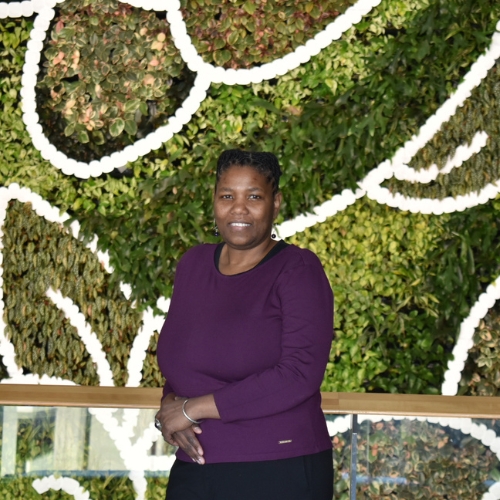
Sabine Lamour is a sociologist specializing in feminist and gender studies in the Haitian and Caribbean contexts. She holds a PhD in sociology from Paris 8 University and has been a professor at the State University of Haiti since 2017. She has also been a visiting professor at Brown University (United States) and is currently a visiting researcher at the Institute for Feminist and Gender Studies at the University of Ottawa.
Her work lies at the intersection of gender sociology, social history, and Afro-diasporic studies. For more than a decade, her research has explored the dynamics of gender inequality, the social and political trajectories of Haitian women, forms of collective memory, and the legacies of coloniality. Her approach favors a subaltern and transnational perspective, attentive to the production of knowledge in Black and Caribbean worlds.
She is the author of Imaginer le féminisme haïtien : Enjeux théoriques et épistémologiques (2025) and co-author of Déjouer le silence : Contre-discours sur les femmes haïtiennes (2018), two reference works for understanding the historicity and contemporary recompositions of feminisms in Haiti. She has also coordinated several thematic dossiers for Études caribéennes, Global Black Thought, and Legs et Littératures, contributing to the dialogue between Caribbean intellectual productions. Her work has appeared in numerous international journals, including Recherches féministes, Revue internationale des études du développement, Conjonction, Alaí, Journal of Haitian Studies, Journal of Aggression, Maltreatment & Trauma, Women, Gender, and Families of Color, and Ethnologies.
She publishes in Haitian Creole, French, English, Spanish, and German, reaffirming the importance of multilingualism as a principle of knowledge production and circulation.
In addition to her academic activities, Sabine Lamour has a longstanding commitment to fieldwork. Former coordinator of Solidarité Fanm Ayisyèn (SOFA), she has collaborated for many years with feminist and community organizations. An independent consultant since 2011, she participates in various initiatives aimed at documenting, analyzing, and transforming the social realities faced by women in Haiti. In 2024, she received the Association of Haitian Studies Award of Excellence, which recognizes the importance of her contributions to feminist studies, Haitian social sciences, and research in her main areas of expertise.