
Learn more about your radiocarbon results with information about precision, quality assurance and analytical routing.

Radiocarbon results

We follow the conventions recommended by Millard (2014) for reporting radiocarbon results. Radiocarbon results will be reported in different formats, depending on your service category.

Report formsMeaning
F14CFraction modern carbon
CRAConventional radiocarbon age
Calendar yearsCalibrated age (available on request for archaeology/paleoecology)
D14C or ∆14CIsotopic ratios (available on request for hydrology/geochemistry)

D14C (defined as permille depletion or enrichment relative to standard normalized for isotope fractionation, equivalent to stable isotope δ notation) is calculated as: (F14C – 1) x 1000.

Δ14C (defined as the absolute amount of 14C in the sample in the year it was measured) is calculated as: F14C · (e(1950-y)/8267) – 1) x 1000.

Please note: If the year of measurement (y) is different from the year of collection (z), calculate as: F14C · (e(1950-z)/8267) – 1) x 1000).
Precision and Uncertainty

Routine counting precision (±23 ‰) is achieved by optimizing AMS measurement times adjusted for the analytical application and sample characteristics. For many routine applications, including soils, sediments, bulk organics, ecological samples, DIC and DOC, overall uncertainty is dominated by sample heterogeneity, pre-treatment, or natural variability rather than AMS counting statistics. In these cases, extended counting to improve measurement precision doesn't improve scientific interpretation.

Routine counting precision of ±23 ‰ is suitable for most archaeological, environmental, hydrological, and biogeochemical applications, including DIC, DOC, soils, sediments and organic matter. This corresponds to approximately ±25 years for samples less than 1000 years old. The uncertainty increases with age due to lower radiocarbon detection limits (e.g., ±125 years for a 13,000-year-old sample).

Conventional radiocarbon ages (CRA) are rounded in line with the conventions in Stuiver and Polach (1977):

CRARoundingErrorRounding
01000nearest 5 up<100nearest 5 up

1000

10000

nearest 10 up1001000nearest 10 up

10000

20000

nearest 50 up>1000nearest 100 up
>20000nearest 100 up----

Instrument selection and analytical routing

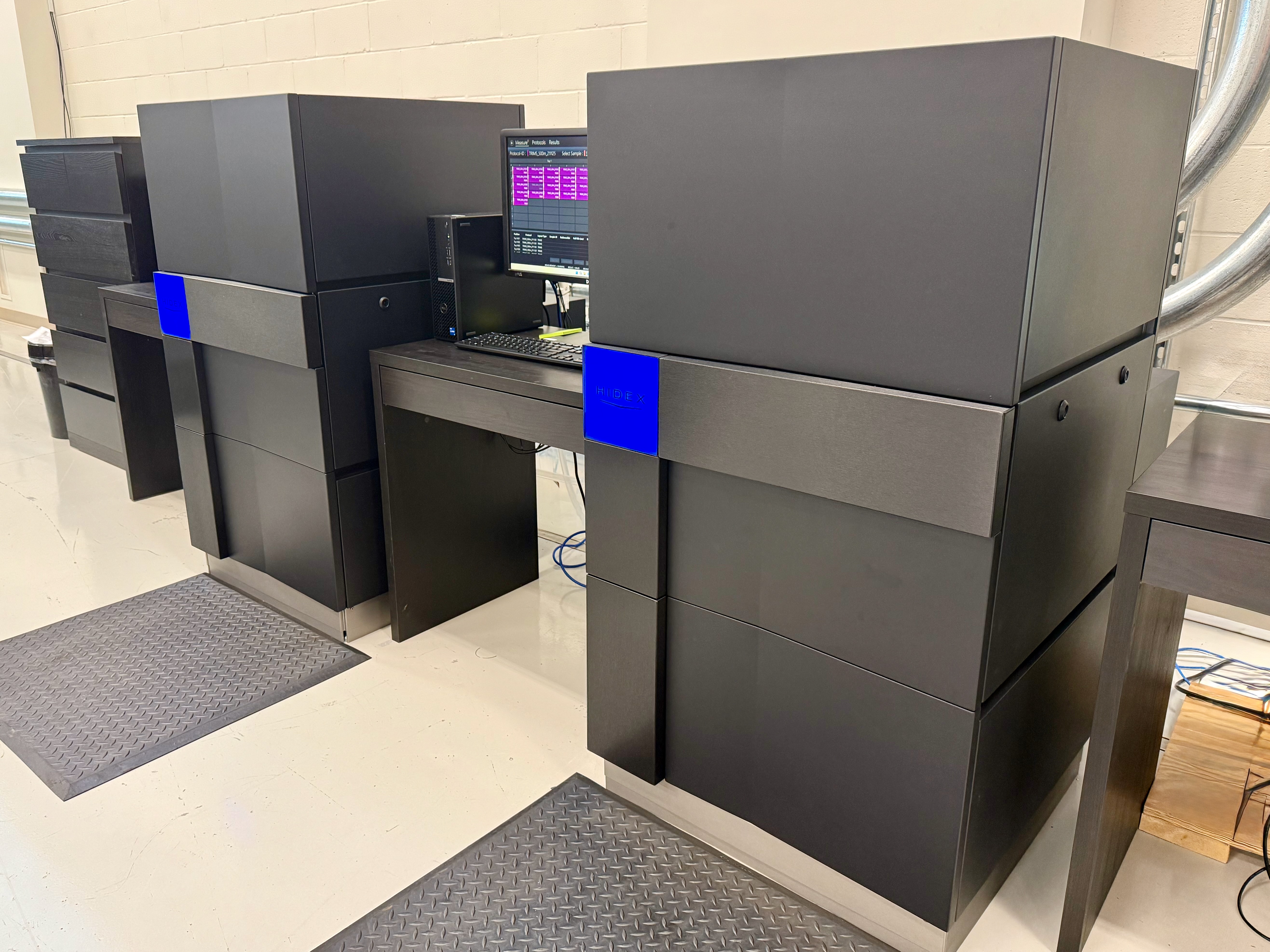
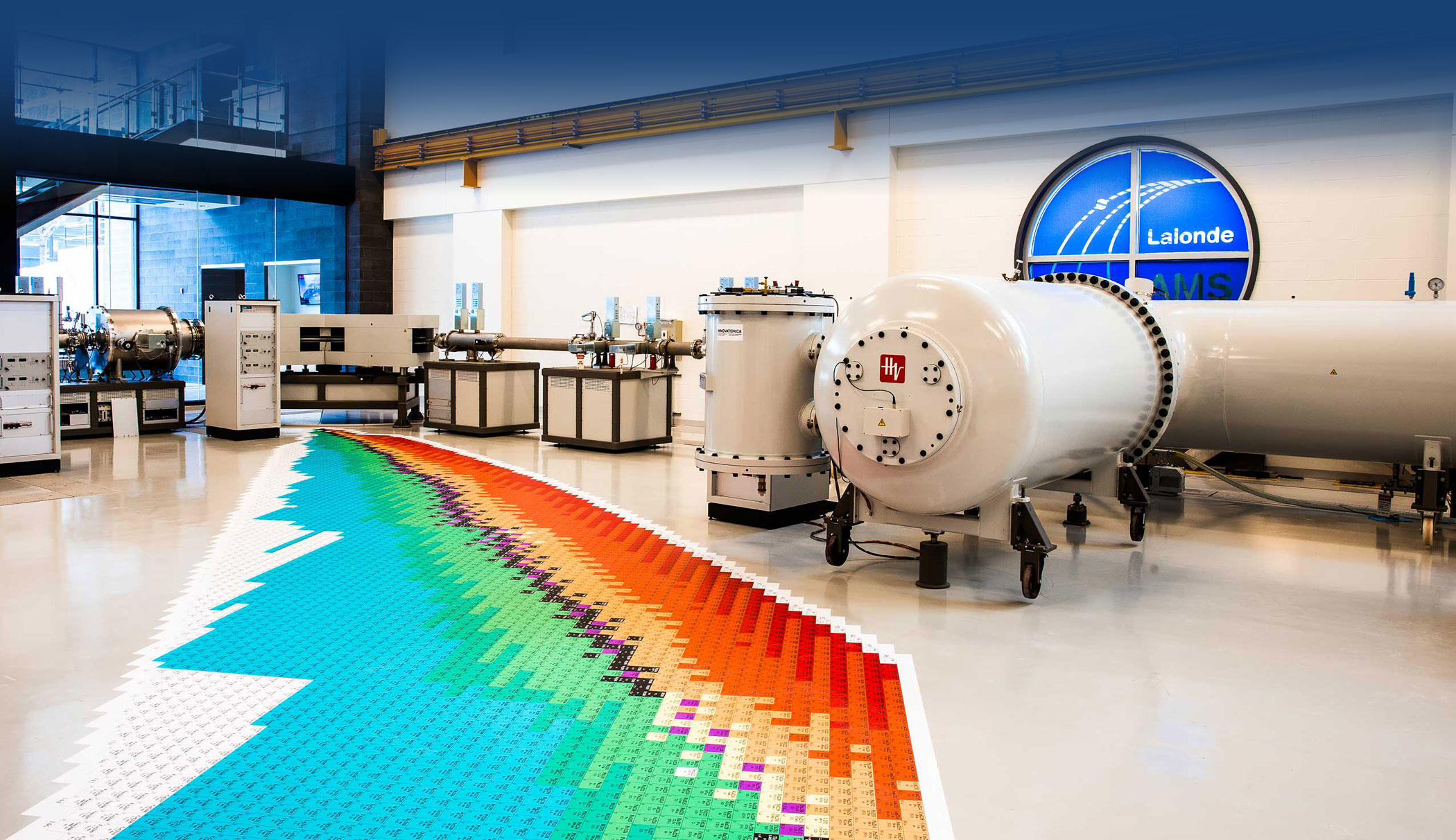
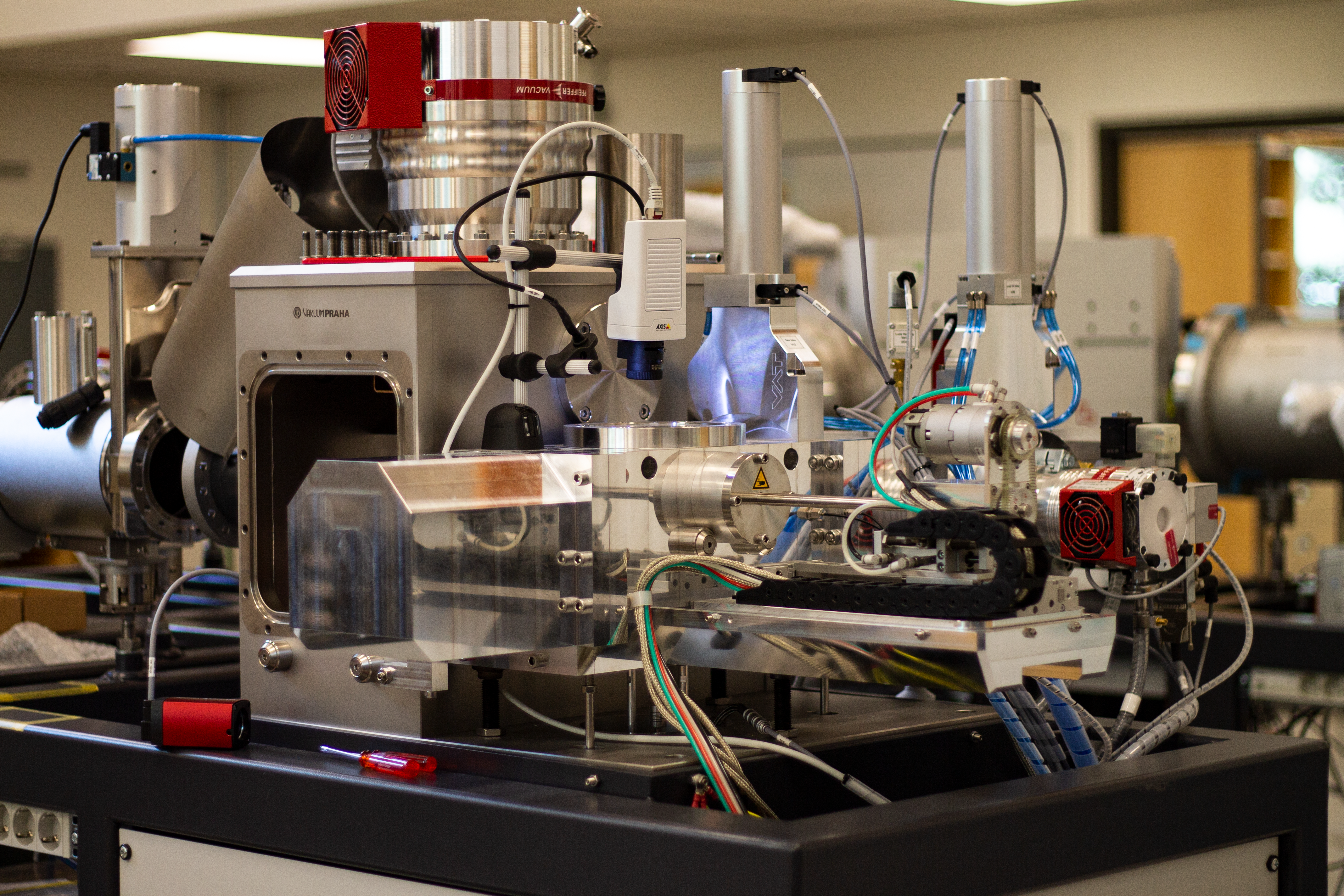
The André E. Lalonde National Facility for Accelerator Mass Spectrometry operates multiple radiocarbon analytical detection platforms. Instrument selection is determined by the laboratory based on:

  • sample type and carbon mass
  • requested analyses and analytical precision
  • throughput and quality considerations

Measurement duration and counting strategy are determined by the laboratory based on the selected service and the scientific application.

Accuracy and quality assurance

All radiocarbon measurements adhere to quality control procedures consistent with international best practices. Our facility participates in all international radiocarbon proficiency tests (e.g., TIRI, FIRI, VIRI, SIRI).

Standard radiocarbon analysis for samples includes:

  • use of Oxalic II as primary reference standard
  • procedural blanks matched to sample type and chemistry
  • secondary standards matched to sample type and chemistry.
  • comprehensive internal QA/QC review of results.